Charleston Flood Zones Explained: A Home Buyer’s Guide to Flood Insurance
7/15/26
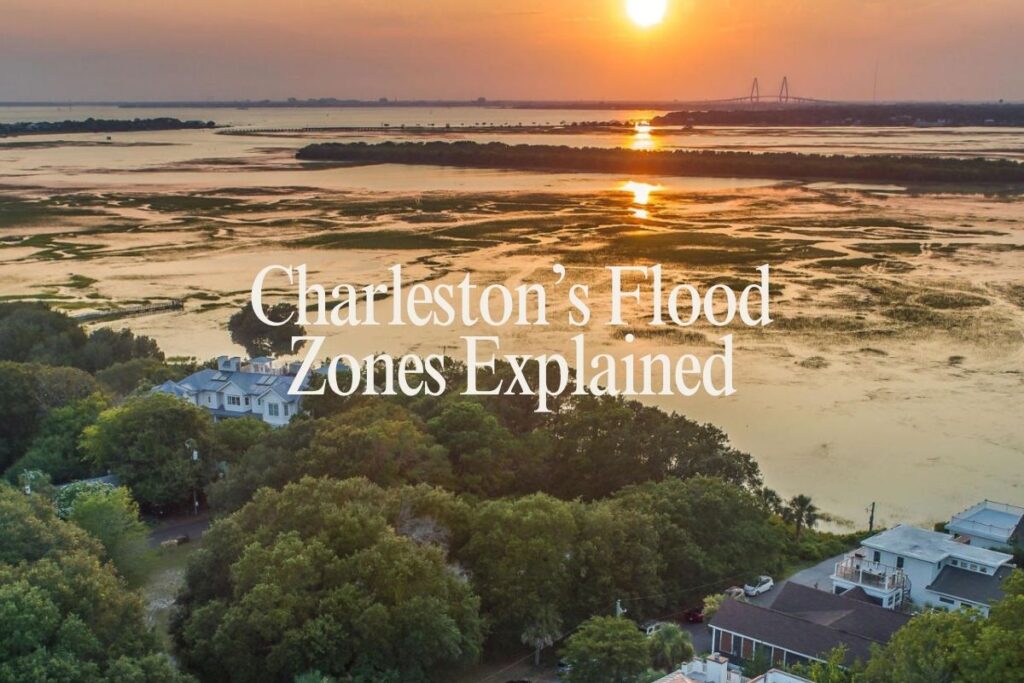
Buying a home in Charleston means embracing one of the country’s most desirable coastal lifestyles. From the historic streets of Downtown Charleston to the beaches of Isle of Palms, Sullivan’s Island, Folly Beach, Mount Pleasant, James Island, Johns Island, Kiawah Island, and Seabrook Island, the Lowcountry offers incredible scenery, waterfront recreation, and a quality of life that attracts people from across the nation.
One of the most common questions I hear from buyers is:
“Does Charleston flood, and should I be concerned about buying in a flood zone?”
Understanding how flooding may impact your home is more nuanced than many people realize.
Not every home is at the same level of risk, and a FEMA flood designation doesn’t automatically mean a property floods regularly. Understanding how flood zones work can help you make a confident, informed decision before purchasing a home.
Does Charleston County Flood?
Charleston County experiences several types of flooding, including:
- Heavy rainfall flooding
- King tide (sunny day) flooding
- Tropical storm flooding
- Hurricane storm surge
- Localized drainage flooding
Some neighborhoods experience temporary street flooding during exceptionally high tides or heavy rain, while others rarely have flooding concerns.
The most important factor isn’t simply the city or neighborhood—it’s the individual property’s elevation, drainage, proximity to marshes or waterways, and FEMA flood designation. That’s why two homes on the same street can have very different flood risks.
What Are FEMA Flood Zones?
Flood zones are maps created by the Federal Emergency Management Agency (FEMA) to estimate a property’s likelihood of flooding during a major flood event.
Flood zones influence:
- Whether flood insurance is required by a lender
- Flood insurance premiums
- Building and renovation requirements
- Elevation standards
- Future development regulations
The flood zones most buyers encounter in Charleston County are Zone X, Zone AE, and Zone VE.
Zone X is generally considered a lower-risk flood area.
- Flood insurance is usually optional and may not be required by your lender.
- Insurance premiums are often much lower.
- Many inland neighborhoods and higher-elevation communities are located within Zone X.
- Some homeowners still choose flood insurance because flooding can occur outside high-risk zones.
For buyers seeking lower monthly ownership costs, Zone X properties are often appealing.
Zone AE is one of the most common flood designations throughout coastal Charleston.
- Mortgage lenders typically require flood insurance.
- Base Flood Elevation (BFE) requirements apply.
- Insurance costs depend heavily on elevation, construction type, and the home’s Flood Elevation Certificate.
- Many marshfront, creekfront, and waterfront homes are located within Zone AE.
Being in Zone AE does not automatically mean the home has flooded before. It simply means FEMA has identified a higher statistical flood risk.
Zone VE represents coastal areas with the highest exposure to wave action during major storms. These areas are commonly found near beachfront properties.
- Flood insurance premiums are generally higher.
- Elevated construction is typically required.
- Building standards are more stringent.
- Elevation and mitigation measures can significantly impact insurance costs.
Many homes on Folly Beach, Sullivan’s Island, Isle of Palms, Kiawah Island, and Seabrook Island fall into VE zones depending on their location and elevation.
Which Charleston County Areas Experience the Most Flooding?
Flooding depends on the property’s location—not just the community. Areas that may experience periodic flooding include:
- Portions of Downtown Charleston
- The Charleston Peninsula
- Low-lying sections of James Island
- Marshfront neighborhoods throughout Mount Pleasant
- Some areas of Johns Island
- Certain waterfront roads throughout the county during king tides and heavy rainfall
Meanwhile, many higher-elevation neighborhoods and newer developments experience significantly fewer flood-related issues.
A local real estate professional can help you evaluate the specific property rather than relying solely on the flood map.
How Much Does Flood Insurance Cost in Charleston?
Flood insurance premiums vary widely because every home is different. Factors that affect pricing include:
- FEMA flood zone
- Finished floor elevation
- Construction type
- Foundation design
- Year built
- Distance from water
- Coverage amount
- Current FEMA Risk Rating 2.0 methodology
The only way to know the actual cost is to request a flood insurance quote before making an offer or during your due diligence period.
Frequently Asked Questions
Is flood insurance required in Charleston County?
If you’re purchasing a home with a mortgage in a FEMA Special Flood Hazard Area (such as Zone AE or VE), your lender will typically require flood insurance. Homes in Zone X generally do not require it, although many owners choose to carry coverage.
Many of Charleston County’s most desirable waterfront communities are located within higher-risk flood zones. Buyers simply need to understand insurance costs, elevation, and long-term ownership expenses before purchasing.
Other Costs of Coastal Homeownership
Flood insurance is only one piece of the financial picture.
Charleston County homeowners should also budget for:
- Homeowners insurance
- Wind and hurricane coverage
- HOA dues (where applicable)
- Exterior maintenance due to salt air
- Elevated foundation maintenance
- Storm preparation and mitigation improvements
Understanding these costs upfront helps prevent surprises after closing.
Why Local Knowledge Matters
Flood maps tell only part of the story.
As a Charleston-area Realtor, I’ve learned that evaluating a property’s flood risk requires looking beyond the FEMA designation. Elevation, drainage improvements, previous renovations, nearby waterways, and neighborhood history all provide valuable context.
Whether you’re relocating from another state or moving across town, it’s important to evaluate each property individually—not make assumptions based solely on the flood zone.
Final Thoughts
Charleston County remains one of the Southeast’s strongest real estate markets, offering historic neighborhoods, world-class beaches, boating, exceptional dining, and a coastal lifestyle that continues to attract buyers from around the country.
Flood zones are simply one factor to consider when purchasing a home. By understanding how FEMA maps work, obtaining insurance estimates early, and working with an experienced local real estate professional, you can make informed decisions and confidently invest in the Lowcountry lifestyle.
Thinking about buying or selling a home in Charleston County? I’d be happy to help you understand flood zones, insurance considerations, neighborhood differences, and the true cost of coastal homeownership so you can make the best decision for your goals.
